











Mon-Sun 9:00 am - 6:00 pm
0
Brew and Roasting Tips

Mini-guide to coffee drinks: 12 popular names today

Espresso, latte, trendy raff, exotic kold bru and masala... there are dozens, if not hundreds, of types of coffee drinks in the world, as many places are constantly trying to offer something new to visitors. We have compiled a guide to help you navigate the world of coffee, discover new flavors, and maybe even awaken your talent as a barista.
Extraction methods: extracting flavor and aroma from grains
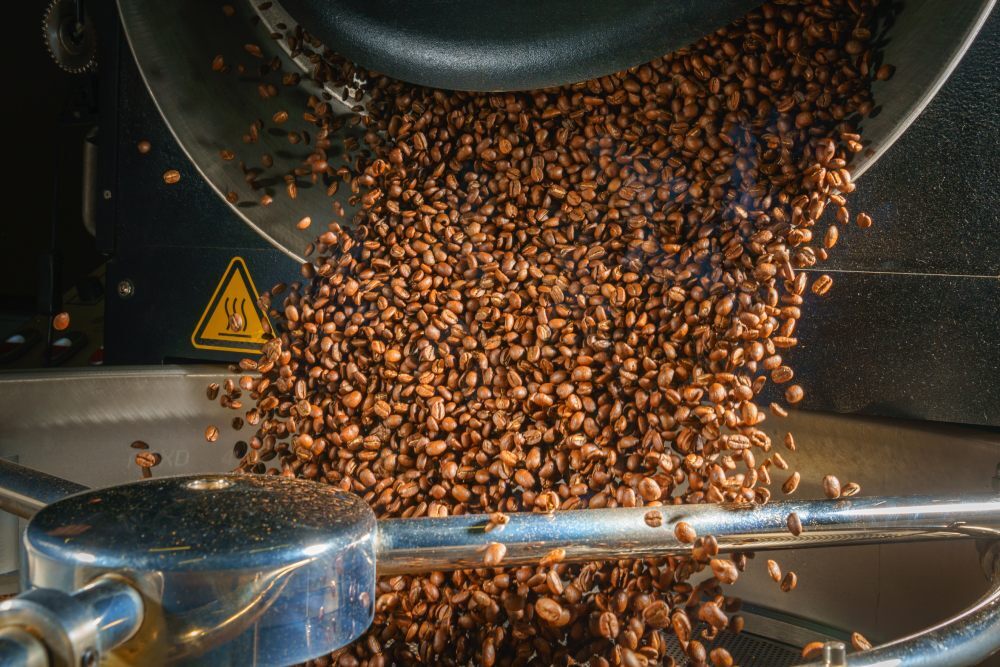
The purpose of coffee preparation is to extract from roasted coffee beans their unique aroma, to make them release into the water aromatic substances and caffeine, for the sake of which we drink this drink. About half of the weight of the coffee bean is cellulose, which does not dissolve and we do not need, the proportion of water-soluble substances is 36%. During the preparation of coffee, even less - up to 26% - passes into water, but this does not mean that we should try to “squeeze” the maximum out of the beans. The Specialty Coffee Association (Specialty Coffee Association) has experimentally established that coffee is most tasty and flavorful when the extraction of substances at the level of 18-22%. Therefore, when preparing coffee, it is important not to overdo it - if the water temperature is too high and the contact with the bean is too long, the bitterness of the beverage will become unpleasant and the characteristic sourness will disappear.


To increase the efficiency of grain extraction and reduce its time, it is necessary to increase the area of its contact with water - for this purpose, the grain is milled. Different degrees of milling are used for different extraction methods.

There are two main categories of brewing methods: immersion and infusion.
In immersion brewing, the ground coffee is completely covered with water and gradually releases soluble substances into it. This is how coffee is made, for example, in a French press - perhaps the easiest to prepare: the technology is almost no different from brewing tea. By the way, the immersion method of extraction is also used for professional tastings. Coffee is brewed open in a cup -- ground coffee is poured with boiling water and allowed to infuse. Immersion brewing methods also include Clever funnel brewing, jezve brewing, and cold brew (infusing coffee in cold water).

The infusion method involves the continuous passage of water through ground coffee. Water can pass through the brew either under gravity or under pressure - the second option allows you to speed up and enhance extraction, to get a brighter flavor. Infusion methods include preparation by drip method, in a geyser coffee maker, in an espresso machine.

The flavor of coffee prepared by different methods will always be different. We cannot recommend using any particular method - it is a matter of individual preference. Try different methods of coffee preparation and choose your own.
However, the method of pressurized coffee preparation in an espresso machine has recently become the most widely used. It allows you to quickly get a batch of rich, aromatic beverage with a high degree of extraction and a large amount of dissolved substances. Espresso coffee retains its aroma and flavor well when diluted and is therefore used as a base for many coffee drinks.
Monochromatic rainbow: black coffee and milk as a base
Coffee drinks can be divided into two broad categories: black coffee-based and milk-based. Additional variations are created by adding syrups, ice cream, cream, spices, and ice.
Black coffee-based drinks

Espresso


Recipe: prepared in a special espresso machine, extraction under pressure
Volume: 25-35 ml
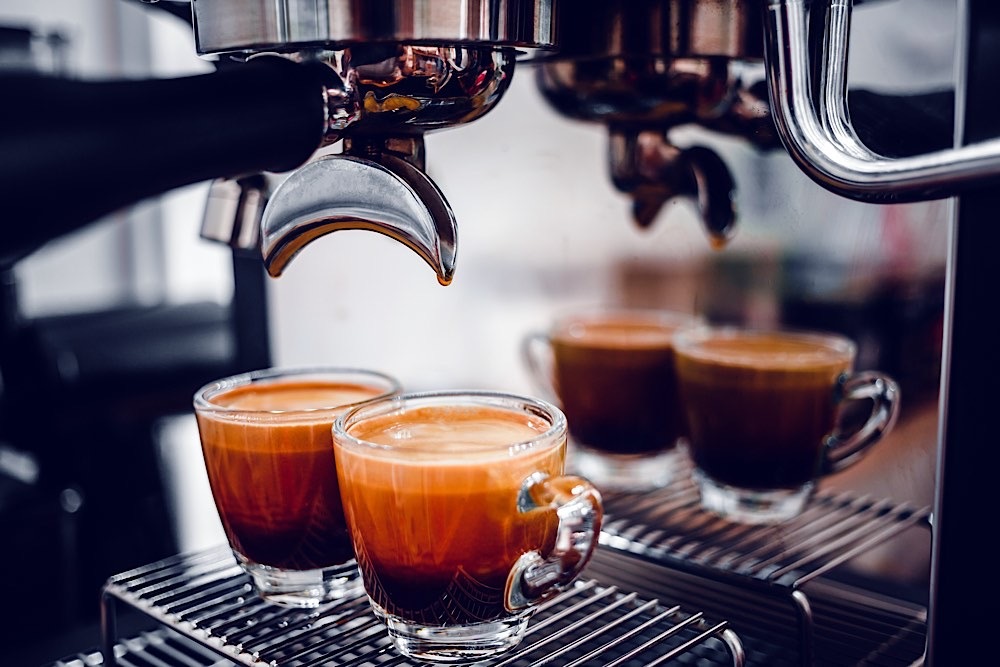
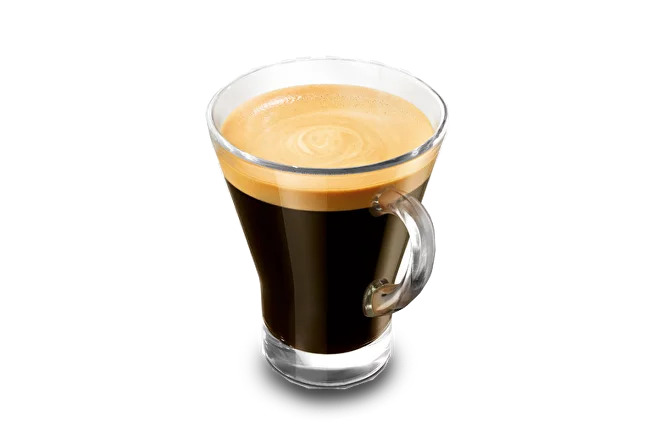
Espresso is the basis of modern coffee shops, their flavorful foundation. It is the basis for the most popular types of coffee - cappuccino, caffe latte, macchiato, flat white. However, getting a portion of a dense drink with a bright flavor and a characteristic creamy crema is possible only in a special coffee machine, which is also called espresso. It passes a mixture of steam and water through a metal filter at a pressure of 8.2-9 atmospheres. Espresso is actually a concentrate of coffee with a syrup-like texture, so you should take a little water: about two grams of coffee per gram of coffee. Thanks to the use of a metal filter rather than a paper filter, the aromatic oils are released into the cup to form a fragrant crema.

Americano

Recipe: espresso diluted with hot water in a ratio of approximately 1:2
Volume: 150 ml
Americano is a coffee for those who find the concentrated flavor and strength of espresso excessive. “American-style coffee” appeared in World War II, when American soldiers in Italy realized that the local coffee for them too strong, and the dosage - too small. It was simply diluted with boiling water, bringing it to the usual strength and volume. In fact, the proportions of water and espresso in Americano are not strict - the volume of boiling water can be varied to get the desired flavor and texture. In Australia and New Zealand they drink their own variation of Americano - Long Black, in which the espresso is poured over boiling water rather than diluted with water after brewing. This method allows the characteristic espresso crema to remain on the surface of the drink.

Ristretto

Recipe: “shortened” espresso with less water content
Volume: 15-25 ml
Ristretto is an even more concentrated coffee than espresso. It is made by halving the espresso water or by turning off the espresso machine before the espresso crema (crema) has formed. The drink has an even brighter and fuller flavor than espresso. Because of this, many people think it also has more caffeine, but this is not the case. The extraction time when making a ristretto is limited to about 15 seconds, and the caffeine only begins to be released into the water when the drink is ready. It has even less caffeine than espresso. Therefore, a ristretto is a way to enjoy the concentrated flavor of coffee rather than getting a “caffeine shot”.

Lungo

Recipe: espresso with twice the amount of water
Volume: 90-170 mm
Lungo coffee (Italian for “long”) shows us again how important the extraction time is. We take the coffee, as for an espresso portion, and prepare it with three times the amount of water for about a minute. The result is a beverage with a higher caffeine content - as you might have guessed, because of the extended extraction time, allowing more of the psychoactive substance to be “leached” from the beans. However, because of the longer extraction time, the flavor of the lungo will be more bitter.

Cold brew

Recipe: infusion of coarsely ground coffee in cold water
Bulk: any quantity, as the cold brew, is kept for a long time.
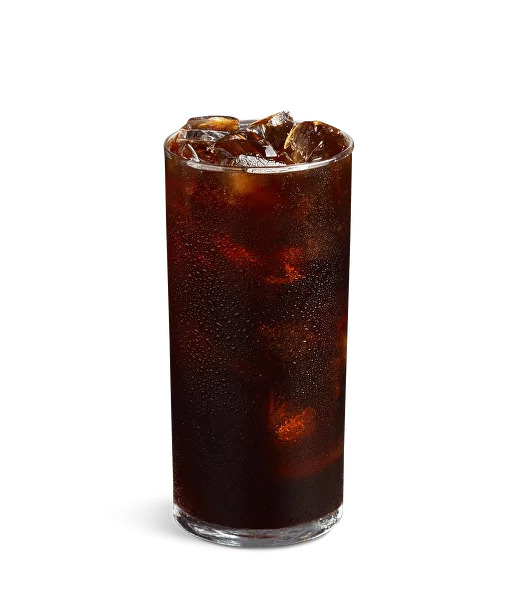
Cold brew is a black coffee made using an alternative method. Coarsely ground beans are poured with cold water and infused for many hours - from 8 to 24, the resulting infusion is filtered and stored in the refrigerator. The duration of extraction, in this case, replaces the high temperature of the water. Cold Brew is high in caffeine and has a bright yet mild flavor. Its serious advantage is that you can brew a lot of it at once and store it for a long time, up to two weeks, in the refrigerator.

Macchiato

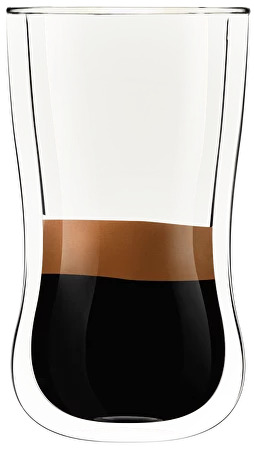
Recipe: standard espresso plus 1-3 teaspoons of foamed milk
Volume: 35-40 ml
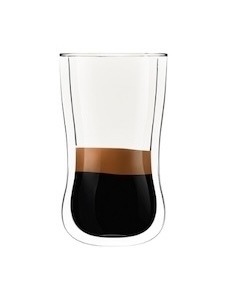
If you find espresso too harsh and cappuccino not strong enough, you might like a macchiato. It's an espresso with a “spot” of foamed milk to soften the flavor of the base drink. Do not confuse macchiato with cappuccino or coffee with milk - milk is present here only in foam, applied on top with a spoon.
Milk-based beverages
Europeans realized the idea of adding coffee to milk back in the 17th century, when they were prompted to do so by observing the Chinese drinking tea with milk. In coffee drinks based on milk, its share in the total proportion is higher than black coffee. As a rule, milk is added to coffee whipped - the fine foam helps to preserve the warmth and flavor of coffee and makes the texture of the liquid delicate.

Cappuccino

Recipe: 1 part coffee (espresso), 1 part milk, 1 part milk foam
Volume: 150-180 ml
It is one of the oldest coffee drinks (dating back to the 17th century) and one of the most popular. Cappuccino offers an excellent balance between the flavors of espresso and milk, and a layer of milk foam additionally gives the drink lightness and a special silky texture. It is prepared based on espresso, on top of which whipped milk is poured. Milk is heated to 60-70 degrees. In this case, it has a sweet flavor, allowing you not to add sugar to the cappuccino, and it does not burn. Therefore, you should get used to the fact that a “proper” cappuccino is never hot.

Latte

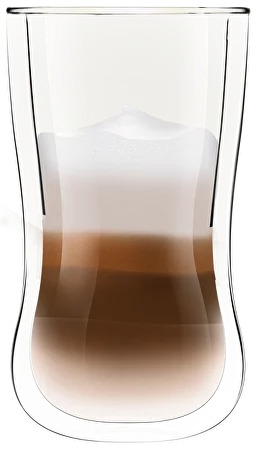
Recipe: 1 part coffee (espresso), 3-4 parts milk, milk foam
Volume: 240-360 ml
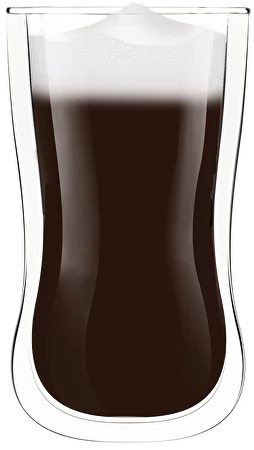
Latte (Italian for “milk”) can be mistaken for cappuccino, but there is three times as much milk in it. Accordingly, the drink's flavor is creamier and softer, while it contains a dose of caffeine, which is standard for espresso. Unlike cappuccino, served in a heated cup, latte is served in tall glasses, and the milk foam in it occupies a much smaller volume (a layer of 5 mm or more). The foam is generally less dense than in a cappuccino, with a larger diameter of bubbles. When ordering a latte in Italy, adding “caffe latte” (caffe latte) is important. Otherwise, you will just be served a glass of milk. Different countries have their own variations of coffee with milk. For example, it is prepared based on condensed milk in Vietnam, Indonesia, and Malaysia.

Flat white

Recipe: 1 part espresso, 2 parts milk
Volume: 150-180 ml
Flat white (flat white or just white) is a drink for those who can't stand the bulky cap of foam on cappuccinos and lattes. The authorship of this drink, which appeared in the 1980s, is disputed by Australia and New Zealand. According to one legend, the milk of New Zealand cows is so fatty that intensive whipping turns it into something like a marshmallow, so the “Kiwis” decided to make coffee with milk almost without foam. The proportions of espresso and milk are the same as in cappuccino (although the recipe based on double espresso is also popular), but the milk does not foam for so long, and the most “fluffy” part of it is represented by a layer of a few millimeters.

Raf-coffee

Recipe: 1 part espresso, 2-4 parts cream, vanilla sugar
Volume: 125-180 ml
Raf coffee has nothing to do with rough coffee (“coarse” black coffee based on coarse-ground beans). Because it is, perhaps, the only popular coffee drink from Russia in the world, and raff, in this case, is an abbreviation of the name Rafael. According to legend, this was a visitor's name to a small coffee bean coffee shop in the center of Moscow, for whom this drink was first invented and prepared in the late 90s. Raff coffee resembles a dessert: espresso, cream, and vanilla sugar are whipped together to form a delicate mass resembling melted ice cream. Delicious, but very caloric.

Mocha

Recipe: 1 part espresso, 2 parts foamed milk, chocolate (in the form of chocolate syrup or cocoa powder), sugar
Volume: 120-170 ml
Chocolate and coffee are similar; it would be strange if they didn't meet in one drink. This is mocha coffee (or mocha or mochaccino), essentially a latte with chocolate added. The chocolate is present in the form of cocoa powder, chocolate syrup, or melted chocolate. The drink is often topped with whipped cream and chocolate shavings. The flavor is dessert-like, as you might expect. The chocolate dominates the coffee, hiding the subtle notes so that any variety will do for a mocha.

Coffee masala

Recipe: a teaspoon of ground coffee, a cup of milk, ¼ cup of water, 2-3 cinnamon sticks, 3-4 cloves, 2 cardamom pods, a teaspoon of ginger powder, half a teaspoon of fennel seeds, sugar to taste
Volume: from 200 ml
If you want something exotic, how about Indian cuisine with its flavor of endless spices? Their composition in masala coffee can be varied; for example, anise, black or red pepper, and nutmeg can be added to the list above. As a rule, masala coffee is brewed with a mixture of spices, milk, and water in a pot or in a French press. But nothing is stopping you from combining a batch of espresso, milk, and spices. In masala, the latter dominates the taste and aroma, so you can take any coffee. The result is a warming drink with a complex flavor characteristic of Indian cuisine.
Choosing a machine: from muscle power to application control
If you want to get excellent quality espresso (and espresso-based drinks) at home or in the office, you need to choose the right appliances. Remember that real espresso can only be obtained under pressure, so it is not suitable for household horn coffee makers without a pump, which are offered by many well-known manufacturers of household appliances.

If your goal is espresso only and you don't need milk foam, you can make do with a lever espresso machine. This simple and efficient design is over 50 years old, but you'll literally have to pressurize it by hand. Lever espresso machines are equipped with a lever that the operator presses to create the pressure needed to make espresso. If you don't want physical exertion to your espresso, but want cappuccinos and lattes, there are semi-professional coffee machines with one or two boilers and a pump. Not only can they make espresso, but they can also whip milk. But these are tools that require practice and additional operations - for example, spilling water before making a drink, emptying the tray.
Are there coffee machines that make delicious and “just right” coffee at the touch of a button? Such a concept is realized, for example, in the TopBrewer coffee station by the Danish manufacturer Scanomat. It combines an espresso machine, coffee grinder and cappuccinatore in one unique device, most of which is hidden under the worktop. Only a sleek curved faucet remains on the outside, and all the controls are in an app installed on your tablet or smartphone. One touch to the screen and TopBrewer delivers a batch of excellent coffee, which is no different from what you would get from a barista in a good coffee shop. Each recipe can be customized and added to your “favorites” in the same app.